Most best aquarium filter round-ups are written for 30-75 gallon community tanks, then bolted on a small-tank section as an afterthought. The result is a top pick like the AquaClear 30 staring back at you from every list, even when you’re actually setting up a 5-gallon shrimp tank where that filter would shred half your colony through the intake.
Nano tanks are different. Less water means parameters swing faster. Tiny intakes kill fry and shrimplets. Strong flow shreds long betta fins. The right filter for a 10-gallon tank is rarely the right filter for a 30-gallon tank, and vice versa. The product cluster that actually fits 5-20 gallon tanks is sponge filters, nano-class HOBs, low-flow internals, and undergravel filters — not the standard “best filter” lineup.
This guide covers the top 5 small aquarium filters by use case (shrimp, display, community, and display-leaning UGF builds), the turnover rate you actually need (most articles get this wrong), why a pre-filter is mandatory if you keep small fish, and the substrate gotcha that ruins more nano filters than any other failure mode.
Disclosure: This post contains affiliate links. If you purchase through a link on this page, we may earn a small commission at no extra cost to you. We only recommend products we’d use in our own tanks.
Quick Comparison
| Filter type | Best for | Mechanical | Biological | Suction risk | Price |
|---|---|---|---|---|---|
| Sponge filter | Shrimp, betta, fry, hospital | Light | Excellent | None | $10–25 |
| Nano HOB | Display tanks, community | Strong | Strong | High (needs pre-filter) | $25–45 |
| Internal power filter | 5–10 gal community | Moderate | Moderate | Moderate | $15–30 |
| Undergravel filter | Display nano on gravel | Light | Strong | None | $20–40 + air pump |
| Pre-filter sponge | Adapter for HOB intakes | Coarse | Light | Eliminates intake risk | $5–10 |
Why Nano Filters Are a Different Category
Three things change when you drop below 20 gallons:
1. Parameter swings happen faster. A 5-gallon tank has 1/15th the buffering capacity of a 75-gallon tank. The same fish poop that’s invisible in a 75-gallon shows up as an ammonia spike in a 5-gallon within hours. Your filter’s biological capacity matters more, not less, in nano tanks. This is why sponge filters — which are biological-filtration powerhouses — punch above their weight here.
2. Suction kills small inhabitants. Shrimplets at hatching are 1–2 mm long. Fry from livebearer or egglayer breeding programs aren’t much bigger. A standard HOB intake will pull them in and grind them on the impeller. Nano HOBs have the same problem — the impeller doesn’t care that the tank is small. Either run a sponge filter (no suction) or fit a pre-filter sponge over an HOB intake. There is no third option if you keep shrimp or breed anything.
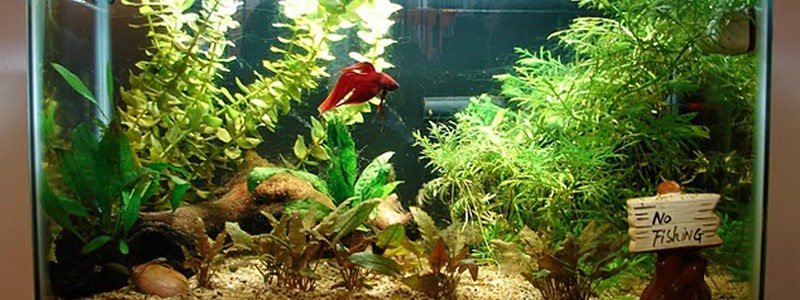
3. Flow strength shreds fins. Long-finned bettas, gouramis, and similar fish stress visibly when the flow rate is too high for the tank volume. The current pushes them around, exhausts them, and tears delicate fins on hardscape. Adjustable-flow filters or sponge filters are the sane choice. Avoid the “more flow is better” instinct — for nano tanks, gentler is usually better.
Best Small Aquarium Filters
Best Overall: Hikari Bacto-Surge Sponge Filter
Best For: Shrimp tanks, betta tanks, breeding setups, hospital and quarantine tanks, and any nano tank where intake safety matters.
If you’re keeping shrimp, fry, or a betta, the conversation starts and ends with a sponge filter — and 2026 testing has a clear consensus winner. The Hikari Bacto-Surge took the top spot in Aquarium Store Depot’s tested sponge-filter round-up, beating budget alternatives on sponge material quality and overall build. The finer pore structure means significantly more bacterial colonization than competitively priced foam filters of similar size.
What makes a sponge filter the right call here is that it’s air-driven, not impeller-driven. There’s no suction strong enough to harm a shrimplet, and no moving parts in the water column to chew up fins. The foam media provides a massive bacterial surface area, which means the biological filtration capacity is excellent — better, gallon-for-gallon, than most small HOBs. More on filtration mechanics here.
The Bacto-Surge ships in four sizes: Mini (up to 10 gal), Small (up to 40 gal), Large (up to 75 gal), and X-Large (up to 125 gal). For a single nano tank, the Mini covers most use cases at the lowest price; the Small is the more versatile pick if you have a 20-gal or want headroom to upgrade.
The trade-off is mechanical filtration. Sponge filters don’t trap fine particulates the way an HOB does, so the water won’t be polishing-clear without help. For shrimp and breeding setups that’s actually fine — the substrate-level biofilm and plant detritus are food, not problems. For display-tank clarity, pair the sponge with an additional small HOB or run the sponge as a backup rather than a replacement.
Pros
- Testing-validated #1 sponge filter for 2026 (Aquarium Store Depot)
- Zero suction — safe for shrimp, fry, and long-finned bettas
- Finer pore structure → more bacterial colonization than competitors
- Four sizes for flexible tank coverage
- Can run on a battery air pump during power outages
Cons
- Light mechanical filtration — water won’t be polishing-clear
- In-tank visible blob; not ideal for showcase aquascapes
- Requires separate air pump + check valve (~$20 extra)
- Tap-water rinsing kills the bacteria — must rinse in tank water only
Best Hang-On-Back: AquaClear 30 Power Filter
Best For: 10–30 gallon display tanks where water clarity matters and there are no shrimp or fry to suck up.


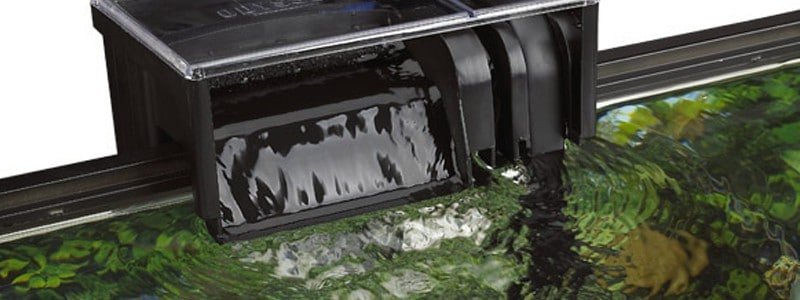
The AquaClear 30 is the nano-end of the lineup that dominates “best aquarium filter” lists for a reason: it actually does what it says. At ~150 GPH rated (call it 90–110 GPH real-world after derating), it covers 10–30 gallon tanks comfortably. The flow control valve is the standout feature — most nano HOBs don’t have one, which means you’re stuck with manufacturer flow whether or not it suits your fish. With the AquaClear, you can throttle down for bettas or up for community tanks.
Mechanical filtration is strong (foam plus polishing media), and the open-media chamber lets you run whatever combination of sponge, biomedia, and chemical filtration (carbon, Purigen) you prefer rather than locking you into proprietary cartridges. Over a 2–3 year window, that flexibility saves enough on cartridge costs to pay for the filter twice.
The honest caveat: the AquaClear 30’s intake is exactly the impeller-fed kind that makes shrimp keepers nervous. If you have shrimp or fry, run a pre-filter sponge over the intake (covered below) — at $5 it’s the difference between a working setup and a body count. The 30 is also rated up to 30 gallons, so on a 5-gallon tank you’ll need to throttle the flow valve back to avoid a current that pushes nano fish around.
Pros
- Adjustable flow rate — rare at this price point
- Open-media chamber for custom filtration
- Strong mechanical and biological filtration
- Same brand reliability as the larger AquaClear lineup
- Quiet motor
Cons
- Intake is shrimp/fry-hostile without a pre-filter sponge
- Slightly bulkier than other nano HOBs
- Initial bubbling on startup until air clears the chamber
Best 5–10 Gallon Internal: Aqueon QuietFlow 10
Best For: Tanks where wall clearance is tight and an HOB won’t fit, or rimless tanks where the back lip is too thin for a hang-on filter.
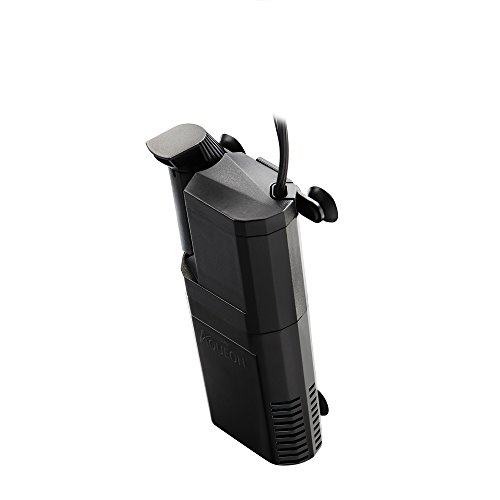
The Aqueon QuietFlow 10 is the middle-ground default for general 5–10 gallon community tanks. It mounts inside the tank with suction cups, so it works in rimless setups where HOBs can’t hang and in tanks pushed against a wall where the back of an HOB has nowhere to go. Adjustable flow rate, adjustable head height, and adjustable spray-bar direction give you more positioning flexibility than most nano filters.
The compromise is in-tank real estate. An internal filter takes up roughly 2 inches of corner space that an HOB doesn’t, which matters when your total water volume is 5 gallons. For a planted display, this is a bigger deal than it sounds — the filter body becomes a permanent visual element you have to design around. For a quarantine or breeder tank where aesthetics don’t matter, it’s the right pick.
Pros
- Works in rimless and tight-wall-clearance setups
- Adjustable flow + spray-bar direction
- Quiet motor lives up to the name
- Cheaper than the AquaClear 20 by ~$10
Cons
- Eats interior tank space (visual + livestock-area)
- Fixed media cartridges (less flexibility than AquaClear)
- Not as gentle as a sponge filter — still has an impeller intake
Best Premium HOB: Seachem Tidal 35 Power Filter
Best For: Aquarists who want top-tier features (whisper-quiet operation, self-priming after power loss, fully customizable media basket) and don’t mind paying $40–50 for them.
The Seachem Tidal 35 is the 2026 Editor’s Choice across multiple comparison guides (Aquarium Store Depot, comparative reviewers) and represents Seachem’s clean-sheet rethink of what a hang-on-back filter should be. The submersed motor lives inside the tank water rather than in an air-cooled housing on the back of the filter, which makes the Tidal one of the quietest HOBs on the market — substantially quieter than the AquaClear 30 in side-by-side testing.
The differentiating features are the ones that matter when something goes wrong: self-priming pump means the filter restarts automatically after a power outage with no need to fill the chamber by hand; overflow prevention redirects water around the filter and back into the tank if the foam clogs, instead of cascading down your wall; and a maintenance alert on top of the filter tells you when the foam needs rinsing. These aren’t gimmicks — they save you from finding a flooded floor or a dry filter chamber after a thunderstorm.
The 35 model is rated up to 35 gallons with 130 GPH flow that can be throttled down to a gentle trickle via a front-mounted dial. The media basket is unusually large for the filter size, accepts any third-party media (Seachem’s own Matrix bio-media ships with the unit), and the filter comes with a 3-year warranty extendable to 5 with registration.
The honest caveat: the Tidal 35 costs roughly twice the AquaClear 30. If your priority is filtration that’s reliable and adjustable, the AquaClear at $20–25 covers 90% of what the Tidal does. The premium gets you quieter operation, the self-priming feature, and the overflow safeguard — worth it for high-traffic display tanks where you’ll see and hear the filter daily, less critical for hobbyist setups where neither factor matters. If you’re looking at tanks above 30 gallons where flow demand spikes, a canister filter is usually the better next step.
Pros
- 2026 Editor’s Choice across multiple comparison guides
- Submersed motor — among the quietest HOBs on the market
- Self-priming after power outage (no manual restart)
- Overflow-prevention safety feature
- 3-year warranty (extendable to 5)
- Adjustable flow (90–130 GPH on the 35)
Cons
- ~2x the price of the AquaClear 30 for the same tank coverage
- Larger physical footprint than budget HOBs
- Premium features only matter if you’ll notice them daily
For Display Builds on Gravel: Lee’s Original Undergravel Filter
Best For: Display nano builds where hiding equipment matters, the substrate is gravel (not sand or aquasoil), and you can plan it in on day 1.

Undergravel filters are the contrarian pick on this list. For most nano tanks, a sponge filter is the easier, cheaper, more flexible choice. But for display-leaning builds where hiding equipment is a priority, the UGF is genuinely worth considering. Only the small uplift tube is visible — a sponge filter is a fist-sized blob inside the tank — and the visual cleanness wins for showcase aquascapes.
Three caveats matter:
- Day-1 setup required. UGF plates go under the substrate before the tank is filled. Retrofitting to an established tank means a teardown — plan it from the start or skip it.
- Higher cost than sponge. Plates, lift tubes, and air pump or powerhead total $30–50+ vs ~$7 for a sponge filter.
- Substrate-restricted. Doesn’t work with fine sand (clogs the plates) or aquasoil (creates anaerobic pockets and crushes the soil’s structure). Only viable on pea gravel or larger.
Run with an air pump rather than a powerhead for nano use — the gentler flow is a better match for small tanks, and the lift tubes won’t shred fry the way a powerhead intake will.
Pros
- Most aesthetic in-tank — only the small uplift tube is visible
- Excellent biological filtration via the entire substrate bed
- No suction risk to fry or shrimp at the lift tube
- Long-lasting — plates outlive most filters
Cons
- Day-1 setup only — can’t add to an established tank
- Substrate-restricted (gravel only, not sand/aquasoil)
- Light mechanical filtration
- Higher initial cost than a sponge filter
Why a Pre-Filter Sponge Is Mandatory With HOBs and Internals
Of every recommendation in this guide, the one most likely to save your livestock is also the cheapest: a pre-filter sponge over the intake of any HOB or internal filter. Without one, the intake will pull in shrimplets, fry, and small juveniles whenever they get within a few inches of it. With one, the intake becomes a passive water-flow surface that fish can rest against without consequence.
Pre-filter sponges run $5–10 and slide directly over standard HOB and internal-filter intakes. They also catch coarse debris before it reaches the impeller, which extends filter motor life and reduces clog frequency. There is no scenario in a nano tank where the pre-filter is the wrong call — even fish-only community tanks benefit from the debris-catching effect.
Filter Intake Placement Matters Too
Even the right filter, sized correctly, will underperform if the intake is in the wrong spot. Two rules:
1. Keep intakes off the substrate. Position HOB and internal-filter intakes 1–2 inches above gravel or 4–6 inches above sand. Lower than that and the filter pulls in substrate debris, clogs media faster, and (for sand substrates) draws fines through the impeller, which abrades it over time.
2. Avoid placement directly beside hardscape or plant cover. Tight corners and dense plant clusters create dead zones where flow can’t reach. Aim for intake placement that lets water circulate the full tank — usually back-corner, with the outflow directing across the tank length.
For sand-substrate tanks specifically, a sponge pre-filter is supplementary protection — not a substitute for height. Strong filters with digging fish (Corydoras, loaches) will still draw fines through the sponge over time. Height matters most.
Real-World Flow vs Rated GPH
One number gets misread on every filter spec sheet: rated flow rate. Manufacturers test in ideal conditions — clean media, zero head height, straight tubing — and publish the resulting GPH. Real-world flow runs 25–50% lower after head height (water has to climb up the lift tube), plumbing bends (every elbow loses flow), and dirty media (biofilm and debris reduce throughput between cleanings) take their toll.
What this means in practice: a filter rated 100 GPH delivers 50–75 GPH in your actual tank. For a 10-gallon nano shooting for 5–10x turnover (50–100 GPH), buy a filter rated ~150 GPH to land in the target range after derating. The Aqueon QuietFlow 10’s “100 GPH” rating is closer to 60–70 GPH real-world, which is fine for a 10-gallon — but if you put it on a 15-gallon, you’re under-filtering.
Frequently Asked Questions
What’s the best filter for a 5-gallon tank?
For shrimp or betta, a sponge filter (Pawfly or equivalent) with a small air pump. For a planted display tank, the AquaClear 20 with a pre-filter sponge over the intake. The Tetra Whisper 10i is the budget fallback if total spend is the constraint.
What’s the best filter for a 10-gallon tank?
Same logic. The 10-gallon is the sweet spot for the Aqueon QuietFlow 10 (internal) and AquaClear 20 (HOB). Sponge filter remains the right pick for shrimp or breeding tanks. UGF works if it’s a gravel-substrate display build planned from day 1.
Do I need a filter in a small fish tank?
Yes. Smaller tanks have less buffering capacity, which means waste accumulates and parameters swing faster than in a larger tank. The filter provides biological filtration (converting fish waste through the nitrogen cycle) and mechanical filtration (clearing particulates). Skipping the filter in a nano tank dramatically increases the risk of ammonia and nitrite spikes that crash the cycle.
Can a filter be too strong for a nano tank?
Yes. Long-finned fish (bettas, fancy guppies, certain gouramis) stress under high flow rates. Shrimp and fry get pushed around by aggressive currents. Aim for 4–6x tank-volume turnover for flow-sensitive setups, and use adjustable-flow filters or sponge filters where possible. The “more flow is always better” rule is for big community tanks, not nano displays.
Should I run two filters on a nano tank?
Often worth it. A sponge filter alongside an HOB gives you redundancy (if one fails, the tank is still filtered), additional biological capacity, and a backup that runs on a battery air pump during power outages. The cost is low — sponge plus air pump runs ~$25–35 — and the resilience benefit is real, especially if you travel.
How often should I clean a nano filter?
HOB and internal media: rinse in tank water every 3–4 weeks. Sponge filters: gently squeeze in tank water monthly. Never use tap water — chlorine kills the bacterial colony you’ve spent weeks establishing. Replace foam media every 2–3 years as it breaks down. Cartridges (Tetra/Aqueon types): replace per manufacturer schedule, but extend the interval if the filter is keeping up.
Are aquarium filter cartridges a scam?
Mostly. Disposable cartridges drive recurring revenue for filter manufacturers but throw away the bacterial colony you’re trying to preserve. Filters with open-media chambers (AquaClear, most internals) let you run reusable foam, ceramic biomedia, and chemical media (carbon, Purigen) at a fraction of the long-term cost. Avoid filters that lock you into proprietary cartridges if you can.
Final Recommendation
For most nano-tank fishkeepers, the right answer depends on what you keep:
If you keep shrimp, breed fish, or have a betta: the Hikari Bacto-Surge sponge filter is the right call. No suction risk, testing-validated #1 sponge for 2026, and excellent biological capacity for a sub-$15 product (Mini size).
If you have a display tank with hardier community fish (best value): the AquaClear 30 with a pre-filter sponge over the intake is the long-term smart spend. Adjustable flow, open-media chamber, and reliable enough to run for 5+ years at $20–25.
If you want premium-tier features (whisper-quiet, self-priming, overflow protection): the Seachem Tidal 35 is the 2026 Editor’s Choice and worth the ~$40–50 spend if you’ll see and hear the filter daily.
If you have a tight-wall-clearance or rimless tank: the Aqueon QuietFlow 10 internal is the right fit. Sacrifices interior space for placement flexibility.
If you’re planning a display-leaning gravel build from day 1: Lee’s UGF gives you the cleanest in-tank aesthetic at the cost of substrate flexibility.
Whatever you pick, two non-negotiables: fit a pre-filter sponge over any HOB or internal intake (covers shrimp/fry safety + extends motor life), and size up the rated GPH by 25–50% to land in your real-world turnover target after the manufacturer’s number is derated.