When I first started researching what types of fish can live with guppies for my own mixed community tank, I nearly stocked it wrong before checking a single water parameter. I’d assumed any small, colorful fish would get along fine. That assumption almost cost me a tank full of stressed, fin-nipped guppies.
The short answer: guppies do best with other peaceful livebearers, small schooling fish, calm bottom dwellers, and a handful of snails and shrimp. They struggle with fin-nippers, large predators, and anything that needs cold water. There’s also one popular pairing worth knowing about: neon and cardinal tetras. It works in practice, but it comes with a water chemistry compromise most articles never mention. This guide covers what types of fish can live with guppies, including that tradeoff, plus how to size the tank so everyone actually thrives.
Disclosure: This post contains affiliate links. If you purchase through a link on this page, we may earn a small commission at no extra cost to you. We only recommend products we’d use in our own tanks.
Quick Answer: What Types of Fish Can Live With Guppies
Here’s the fast reference on what types of fish can live with guppies before we get into the reasoning behind each pick. Green means it’s a solid match, gold means it works but needs a conscious tradeoff, and red means skip it.
| Species | Compatibility | Notes |
|---|---|---|
| Mollies, Platies, Swordtails, Endler’s | Good | Same livebearer family, matching size and water needs |
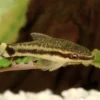
| Corydoras Catfish, Otocinclus | Good | Peaceful bottom feeders that ignore guppies entirely |
| Kuhli Loach, Bristlenose Pleco | Good | Shy cleanup crew; skip the common pleco, it grows too large |
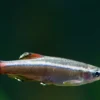
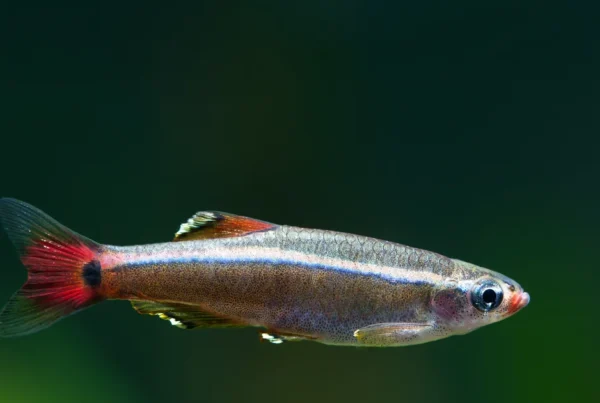
| Harlequin Rasbora, White Cloud Minnow | Good | Peaceful schoolers close to guppies in size |
| Honey Gourami, Sparkling Gourami | Good | Calm temperament, no interest in fin nipping |
| Neon Tetra, Cardinal Tetra | Caution | Peaceful, but prefers softer, more acidic water than guppies |
| Nerite Snail, Mystery Snail, Amano Shrimp | Good | Peaceful algae control, no predation risk to adult guppies |
| Cherry Shrimp | Caution | Adults are fine, but shrimp fry are at risk of being eaten |
| Tiger Barb, Serpae Tetra | Avoid | Notorious fin-nippers that target guppies’ long tails |
| Angelfish, Cichlids | Avoid | Size mismatch; will eat fry and may bully adults |
| Male Betta | Avoid | Mutual fin-nipping risk in both directions |
| Goldfish | Avoid | Needs cold water; guppies need tropical warmth |
What Makes a Good Guppy Tank Mate
Knowing what types of fish can live with guppies starts with three shared traits: a peaceful temperament, a similar adult size (roughly 1 to 3 inches), and water parameters that overlap with a guppy’s needs. Here’s the quick breakdown:
- Peaceful temperament, with no history of fin-nipping or bullying
- Adult size in the same general range as guppies, roughly 1 to 3 inches
- Water parameters that overlap with a guppy’s warm, neutral-to-alkaline needs
Guppies do best in warm, tropical water between 72 and 82°F, with a sweet spot around 75 to 78°F. They also prefer neutral to slightly alkaline water, in the 7.0 to 7.8 pH range.
Size matters more than most beginners expect. Any fish small enough to fit in another fish’s mouth will eventually get eaten. A tank mate’s adult size, not its size at the pet store, is what you should plan around. Water chemistry matters just as much. Species from very different pH and hardness zones generally can’t thrive together long-term, even if they tolerate each other for a while.
Guppies are also shoaling fish, meaning they’re happiest in groups of their own species rather than as lone specimens dropped into a community tank. Keeping guppies in a group of at least three or four, alongside compatible tank mates, gives you a calmer, more natural-looking tank. This beats mixing a single guppy into an otherwise unrelated cast of fish. For more on the full care picture, see our guppy care guide.
Best Tank Mates: Other Livebearers and Schooling Fish
When people ask what types of fish can live with guppies, other livebearers are usually the first and safest answer. Mollies, platies, swordtails, and Endler’s livebearers all share the same general temperament, size range, and water chemistry as guppies. That overlap makes mixing them one of the lowest-risk choices you can make.
Small schooling fish work well too. Harlequin rasboras stay peaceful and close in size to guppies. White cloud minnows are an especially flexible option because they tolerate a broader temperature range than guppies do. That gives you more flexibility if your tank runs on the cooler side. For a closer look at that species specifically, see our white cloud minnow care guide.
One clarification worth making here: guppies shoal rather than school in the strict sense. They group together socially without swimming in tight, synchronized formations. That distinction matters when you’re deciding how many guppies to keep alongside other species. Our guide to guppy shoaling behavior covers this in more detail.
Best Tank Mates: Bottom Dwellers and Cleanup Crew
Bottom-dwelling fish round out the list of what types of fish can live with guppies nicely. They occupy a different part of the water column and generally ignore what’s happening near the surface. Corydoras catfish and otocinclus are two of the most reliable choices, both peaceful and focused on foraging rather than fin nipping.
Kuhli loaches are another solid pick. They’re shy, mostly nocturnal, and spend their time sifting through substrate rather than interacting with guppies at all. Bristlenose plecos also work well as algae control, but this is one spot where sizing really matters. Stick with the bristlenose specifically. The common pleco sold at many pet stores grows well beyond a foot long, and it will eventually outgrow a guppy tank entirely.
Peaceful Gouramis and Other Community Fish
A few gourami species also answer the question of what types of fish can live with guppies, provided you pick the calmer ones. Honey gouramis and sparkling gouramis are both known for a mellow temperament that doesn’t extend to chasing or nipping smaller fish. That makes them a safe addition to an established community.
Beyond gouramis, Boesemani rainbowfish and long-fin black skirt tetras are also worth considering. Both are peaceful, active swimmers that add visual interest without competing aggressively for space or food. As with any addition, introduce new fish gradually. Keep an eye on the tank for the first couple of days to make sure everyone settles in.
The Neon Tetra Compromise: A pH Mismatch Worth Knowing About
Neon and cardinal tetras show up on almost every guppy tank mate list, and it’s easy to see why. They’re peaceful, visually striking, and roughly the same size as guppies. What most lists leave out is that neon and cardinal tetras naturally prefer softer, more acidic water below pH 7.0. Guppies, on the other hand, prefer neutral to slightly alkaline water in the 7.0 to 7.8 range.
As a general rule, species from noticeably different water chemistry zones don’t thrive together over the long haul, even if they seem fine at first. In practice, though, keepers successfully house neon and cardinal tetras with guppies at a middle-ground pH for years without major issues. This pairing works often enough that it isn’t something to rule out entirely.
The point isn’t to avoid this combination. It’s to go in with your eyes open. If you’re set on keeping tetras with guppies, aim for a stable pH in the high 6s to low 7s as a compromise. Test your water regularly, and watch both species for signs of stress rather than assuming the pairing is automatically risk-free.
Invertebrates That Thrive With Guppies
Snails and shrimp aren’t fish, but they round out the question of what types of fish can live with guppies by adding a cleanup crew without competing for the same food or space. Mystery snails and nerite snails are both peaceful algae eaters that guppies leave alone entirely, and neither poses any predation risk to adult guppies. For more on stocking either one, see our mystery snail care guide and our guide to nerite snail varieties.
Amano shrimp are another strong match. They’re large enough as adults to avoid being seen as food. They’re also genuinely excellent at controlling hair algae, which makes them useful beyond just compatibility. Because Amano shrimp can’t reproduce in freshwater, you won’t end up with an accidental shrimp population to manage. Our Amano shrimp care guide covers their needs in full.
Cherry shrimp are the one invertebrate that comes with a caveat. Adult cherry shrimp generally coexist fine with guppies, but their much smaller fry are at real risk of being eaten. Don’t expect a stable breeding cherry shrimp colony in a guppy tank unless you provide dense plant cover for the babies to hide in.
Fish and Setups to Avoid
Answering what types of fish can live with guppies also means naming what doesn’t work. Cichlids are generally too aggressive and, in many cases, too large for a guppy tank. Angelfish present a similar problem: they grow large enough to see adult guppies as targets for bullying and guppy fry as an easy meal.
- Cichlids and angelfish: aggression and size mismatch, will bully adults and eat fry
- Tiger barbs and serpae tetras: notorious fin-nippers
- Male bettas: mutual fin-nipping risk in both directions
- Large predatory catfish: can grow big enough to eat guppies outright
- Goldfish: needs cold water, incompatible with a guppy’s tropical requirements
Male bettas are another common mistake. The two species can nip at each other’s fins, and unlike a betta-only tank, a guppy community doesn’t give a betta the space it typically wants. If you’re specifically planning a betta setup, our betta tank mates guide covers which species actually pair well with bettas instead. Finally, skip large predatory catfish, which can grow big enough to eat guppies outright. Also skip goldfish, which need cold water that’s fundamentally incompatible with a guppy’s tropical requirements.
Sizing a Mixed Guppy Community Tank
A 10-gallon tank can comfortably house 5 to 6 guppies on their own with consistent maintenance. Once you start mixing sexes and adding other livebearers, though, that same 10-gallon tank fills up fast. Guppies and other livebearers breed readily, and a mixed-sex group in a 10-gallon setup will typically overcrowd within a few months as new fry mature.
A 20-gallon tank is the better starting point for a mixed-sex guppy community, since it gives population growth somewhere to go before things get cramped. This is also where sex ratios come into play: the standard guidance for livebearers is one male to at least three females. That ratio spreads out male attention and reduces the chronic stress a single female faces in a 1:1 pairing. Our note on guppy care fundamentals covers this ratio in more depth.
If you’re setting up a new mixed community from scratch, a 20-gallon complete kit like the Tetra Aquarium 20 Gallon Complete Tropical Fish Tank Kit gives you tank, filtration, and lighting in one package. That’s a practical way to start at the right size instead of upgrading later.
Tetra Aquarium, 20 Gallon, Complete Tropical Fish Tank Kit
FAQ
What types of fish can live with guppies?
The short answer to what types of fish can live with guppies is: peaceful livebearers like mollies and platies, small schoolers like harlequin rasboras, calm bottom dwellers like corydoras, and select gouramis. Snails and shrimp round out the list as a peaceful cleanup crew. Avoid fin-nippers, large predators, and anything that needs cold water.
Can guppies live with bettas?
It’s risky, particularly with male bettas. Guppies’ long fins can trigger a betta’s aggression, and the reverse fin-nipping can happen too. If you’re building a betta-focused tank, it’s worth looking at species that are specifically suited to betta temperament instead.
Will guppies breed with other livebearers?
Guppies, mollies, platies, and swordtails don’t typically interbreed, so hybrid fry aren’t something most keepers need to plan around. That said, male livebearers of any species will court nearby females. That’s why the one-male-to-three-female ratio guidance applies across your whole mixed group, not just to guppies alone.
Do guppies need other guppies to feel secure?
Yes. Guppies are shoaling fish. They show more natural activity and less stress when kept in a group of their own kind rather than as a single specimen surrounded by unrelated species. A group of three or four guppies alongside compatible tank mates is a better setup than one lone guppy.
Can shrimp survive with guppies?
Amano shrimp survive well with guppies since they’re large enough as adults to avoid being seen as food. Cherry shrimp adults generally do fine too, but their fry are small and vulnerable. A breeding cherry shrimp colony needs dense plant cover to have any chance of surviving alongside guppies.
Final Thoughts
Knowing what types of fish can live with guppies comes down to matching temperament, size, and water chemistry. Then it’s about being honest about the tradeoffs when a popular pairing isn’t a perfect match. Other livebearers, peaceful schoolers, calm bottom dwellers, select gouramis, and snails or shrimp all make strong additions with minimal compromise.
Neon and cardinal tetras can work too, as long as you go in knowing about the pH difference instead of assuming it away. Size the tank for where your community is headed, not just where it starts. That way you’ll spend a lot less time troubleshooting fin damage or overcrowding down the road. For the fundamentals of keeping guppies healthy long-term, our guppy care guide is a good next stop.