If you’ve ever locked eyes with a flowerhorn through the glass at your local fish store and thought “I need that thing in my life,” you already understand why flowerhorn fish care is one of the most searched topics in the freshwater hobby. That massive nuchal hump, the electric colors, the way they follow your finger across the tank like a puppy, there’s nothing else quite like them.
But flowerhorns aren’t goldfish. They’re big, messy, aggressive, and opinionated about pretty much everything in their environment. Get their care right, and you’ll have a personable, jaw-dropping centerpiece fish that lives over a decade. Get it wrong, and you’ll deal with faded colors, a shrinking kok, and a miserable fish. This guide covers everything I’ve learned keeping these hybrid cichlids, no fluff, just what actually works.
Disclosure: This post contains affiliate links. If you purchase through a link on this page, we may earn a small commission at no extra cost to you. We only recommend products we’d use in our own tanks.
Quick Overview
| Attribute | Detail |
|---|---|
| Common Names | Flowerhorn, Flowerhorn Cichlid, Hua Luo Han, Louhan |
| Scientific Name | Amphilophus hybrid (no single scientific name, man-made hybrid) |
| Family | Cichlidae |
| Origin | Man-made hybrid (Southeast Asia, late 1990s), parent species from Central and South America |
| Adult Size | 12–16 inches (30–40 cm) |
| Lifespan | 10–12 years (up to 15 with excellent care) |
| Tank Size | 75 gallons minimum (single fish); 150+ gallons for pairs or tank mates |
| Temperature | 80–86 °F (27–30 °C) |
| pH | 6.5–8.0 |
| Temperament | Highly aggressive and territorial |
| Diet | Omnivore (protein-heavy) |
| Care Level | Moderate |
What flowerhorns look like (and how to sex them)
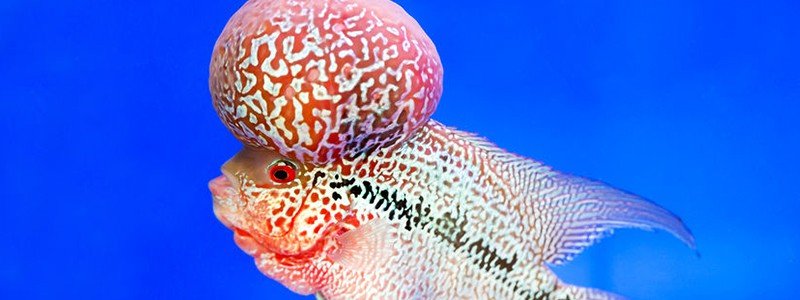
The flowerhorn’s most iconic feature is the nuchal hump, commonly called the kok, that protrudes from its forehead. Males develop significantly larger koks than females, and the size of that hump is the single biggest factor in a flowerhorn’s value. A show-quality male with a massive, symmetrical kok can fetch thousands of dollars.
Beyond the hump, flowerhorns display vivid base coloration ranging from deep crimson reds to electric blues, with many specimens showing intricate black markings called “pearling”, metallic flecks that shimmer across the body. Their fins are large and flowing, and their eyes tend to be white or red depending on the strain. Most adults reach 12–16 inches, with males being noticeably larger and more colorful than females.
Male vs. Female Differences
Sexing flowerhorns is straightforward once they mature. Males develop a much larger kok, grow bigger overall (often 14–16 inches vs. 10–12 for females), and display more intense coloration. Females are smaller, have a less prominent hump, and develop a visible black spot on their dorsal fin that males lack. Males also tend to have a more pronounced, squared-off jawline. Venting is the most reliable method for young fish, males have a V-shaped vent, while females show a U-shaped one.
Flowerhorn Varieties
Flowerhorns have been selectively bred into several distinct strains since the late 1990s. The original hybrids involved blood parrot cichlids, trimac cichlids (Amphilophus trimaculatus), midas cichlids (Amphilophus citrinellus), and various Vieja species. Each variety has different characteristics that affect price, appearance, and kok potential.
| Variety | Description |
|---|---|
| Zhen Zhu (Pearl) | The most common variety in the US. Known for heavy pearling (metallic white flecks), longer body shape, pronounced black markings, and a generally more affordable price point. Good kok development. |
| Kamfa | Shorter snout, rounder body, sunken eyes, and typically the largest koks. Crossed with blood parrot and Vieja species. Wrapped or fan tail is a defining trait. Generally more expensive than Zhen Zhu. |
| King Kamfa | The premium tier of Kamfa breeding. Massive kok, intense pearling, white or yellow eyes, thick body, and vivid red or blue coloration. Show-quality specimens command high prices. |
| Golden Base (Faders) | Named because juveniles “fade” to black before their adult colors emerge, typically vivid red or rich golden-yellow. Includes the Golden Trimac line. The fading process can be alarming for new keepers who think their fish is sick. |
| Golden Monkey (Kamalau) | Rare and expensive. Vibrant red base coloration, prominent kok, and strong pearling. Originated from the Luohan strain. One of the most sought-after varieties among collectors. |
| Red Dragon / Super Red Dragon | Bred for intense, uniform red coloration covering the entire body. Super Red Dragons have even deeper crimson pigment with minimal black markings. Popular in Asian markets. |
| Thai Silk (Titanium) | Metallic blue-white or silver body with a smooth, almost iridescent sheen. Shorter body shape. Typically smaller koks compared to Kamfa varieties but prized for their unique metallic look. |
Flowerhorn tank size and setup requirements
Tank Size
A single flowerhorn needs at least a 75-gallon tank, and honestly, bigger is always better with these fish. They grow fast, they’re active, and they produce a ton of waste. A 75-gallon is the bare minimum for a full-grown adult; if you’re planning to keep tank mates or a breeding pair, you’re looking at 150 gallons or more. Juveniles can start in a 55-gallon, but you’ll be upgrading within a year.
Length matters more than height. A standard 75-gallon (48″ x 18″ x 21″) gives them adequate swimming room, but a 125-gallon (72″ x 18″ x 22″) is what I’d recommend if you have the space and budget.
Filtration
This is non-negotiable: flowerhorns are heavy bio-load fish. You need filtration that turns over the tank volume 6–8 times per hour. For a 75-gallon tank, that’s a filter rated for at least 450–600 GPH. A quality canister filter is the gold standard here, something like the Fluval FX4 or FX6 handles the waste these fish produce without breaking a sweat. If you want to explore options, we have a full breakdown of the best canister filters for different tank sizes.
Pair the canister with a sponge pre-filter on the intake to extend maintenance intervals and protect the impeller from gravel your flowerhorn will inevitably rearrange.
Heating
Flowerhorns are tropical fish that need consistent warmth. A reliable heater is essential, temperature swings stress these fish and can trigger disease. For a 75-gallon, a 300-watt submersible heater works well. For larger tanks, use two heaters on opposite ends for even heat distribution. Check out our guide to the best aquarium heaters for specific recommendations.
Water Conditions
| Parameter | Ideal Range |
|---|---|
| Temperature | 80–86 °F (27–30 °C) |
| pH | 6.5–8.0 (7.0–7.8 ideal) |
| General Hardness (GH) | 8–20 dGH |
| Ammonia | 0 ppm |
| Nitrite | 0 ppm |
| Nitrate | Below 20 ppm (below 40 ppm acceptable) |
Weekly water changes of 25–30% are essential. Some experienced keepers do 30–40% twice a week for show-quality fish, clean water is the single biggest factor in kok development and color intensity outside of genetics. Always treat new water with a dechlorinator and match the temperature before adding it to the tank.
Substrate and Decorations
Many experienced flowerhorn keepers run bare-bottom tanks, and there’s a practical reason: these fish dig. Constantly. They’ll rearrange gravel, uproot plants, and shove decorations around like furniture movers on a deadline. A bare-bottom tank is easier to clean and eliminates the risk of substrate ingestion.
If you want substrate for aesthetics, use larger gravel or river rocks that can’t be swallowed. Avoid fine sand, flowerhorns will sift it through their gills and can injure themselves. Skip live plants entirely (they’ll be destroyed within hours). Decorations should be smooth with no sharp edges, and anchored firmly, a motivated flowerhorn can topple unsecured rocks.
Diet and Feeding
What They Eat
Flowerhorns are protein-hungry omnivores that will eat practically anything. In the wild (well, they don’t exist in the wild, but their parent species do), the ancestor species fed on insects, small fish, crustaceans, and plant matter. In captivity, a high-quality cichlid pellet forms the base of their diet, supplemented with live and frozen foods for variety and nutrition.
Diet directly impacts kok growth and coloration. Quality pellets with astaxanthin and spirulina enhance reds, while a varied diet with shrimp and krill supports the development of the nuchal hump. Avoid feeder fish, they carry parasites and offer poor nutritional value compared to pellets.
Recommended Foods
| Food | Type | Notes |
|---|---|---|
| Hikari Cichlid Gold | Pellet (staple) | Excellent all-around staple. Color-enhancing formula. Most flowerhorn keepers use this as a daily base. |
| Omega One Super Color Cichlid Pellets | Pellet (staple) | Whole salmon and shrimp as first ingredients. Great for color enhancement without artificial fillers. |
| Frozen Bloodworms | Frozen (supplement) | High protein treat. Feed 2–3 times per week. Don’t overdo it, can cause bloat if overfed. |
| Freeze-Dried Krill | Freeze-dried (supplement) | Natural astaxanthin boosts red coloration. Soak before feeding to prevent digestive issues. |
| Market Shrimp (shell-on) | Fresh (supplement) | Grocery store shrimp with shell. Rich in chitin and carotenoids for kok growth and color. Feed 1–2 times per week. |
| Blanched Peas | Vegetable (supplement) | Helps with digestion and prevents constipation. Remove the skin before feeding. Once per week is plenty. |
Hikari Cichlid Gold Large Pellets
Omega One Super Color Cichlid Pellets
How Much and How Often
Feed juveniles (under 6 inches) 2–3 times per day, they’re growing fast and need the calories. Adults do well with 1–2 feedings daily. The portion should be roughly what they can consume in 2–3 minutes. Remove any uneaten food after 5 minutes to keep water quality stable.
One fasting day per week helps their digestive system reset. Many experienced keepers skip feeding on Sundays and report better long-term health. If you’re looking for quality cichlid food options beyond flowerhorn-specific brands, our best cichlid foods guide covers the top-rated options.
Tank Mates
Behavior and Temperament
Let me be blunt: flowerhorns are bullies. They’re one of the most aggressive freshwater fish in the hobby, and most experienced keepers house them alone. They’re territorial, they bite, and they will kill tank mates that can’t defend themselves or get out of the way. This isn’t occasional aggression, it’s their personality.
That said, they’re also incredibly interactive with their owners. Flowerhorns recognize their keepers, beg for food, and many will let you pet them (yes, really). The aggression is directed at other fish, not at you. If you want a fish with dog-like personality, a solo flowerhorn in a big tank is hard to beat.
If you absolutely want tank mates, you need a very large tank (150+ gallons), heavy line-of-sight breaks, and fish that are big enough, tough enough, or armored enough to survive. Even then, monitor closely, what works for months can go wrong overnight.
| Species | Compatibility | Notes |
|---|---|---|
| Common Pleco | Good | Armored body, nocturnal, stays out of the flowerhorn’s way. One of the safest tank mates. Needs driftwood and hiding spots. |
| Bichir (Senegal or Ornate) | Good | Tough ganoid scales protect them. Bottom-dweller that occupies different tank space. Needs 125+ gallon tank with both fish. |
| Oscar | Caution | Similar size and can hold their own, but aggression varies by individual. 150+ gallon tank required. Monitor constantly during the first few weeks. |
| Jaguar Cichlid | Caution | Large and aggressive enough to coexist. Can actually out-aggress a flowerhorn. Needs 180+ gallons, two alpha fish in one tank is always a gamble. |
| Silver Arowana | Caution | Occupies top of tank. Needs a massive tank (250+ gallons). Works because they stay in different zones, but arowana are delicate despite their size. |
| Giant Gourami | Caution | Large enough to not be bullied. Relatively peaceful but can handle themselves. 150+ gallon tank minimum. |
| African Cichlids | Avoid | Too small to defend themselves. Will be killed or constantly stressed. Different water parameter preferences too. |
| Angelfish | Avoid | Way too slow and delicate. Will become an expensive snack. Not even worth trying. |
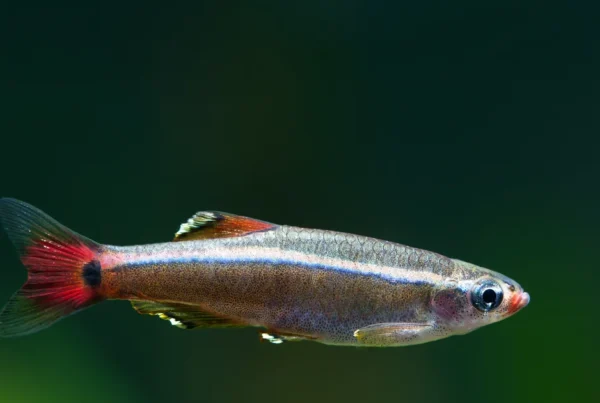
| Tetras / Small Community Fish | Avoid | These are food, not tank mates. Any fish small enough to fit in a flowerhorn’s mouth will end up there. |
| Other Flowerhorns | Avoid | Two males will fight to the death. Male-female pairs can work in 150+ gallons for breeding but require a divider when not actively spawning. |
Kok (Nuchal Hump) Growth
The kok is what makes a flowerhorn a flowerhorn, and maximizing it is the holy grail for most keepers. Here’s the truth: genetics is about 70% of the equation. If your fish doesn’t have the genetic potential for a big kok, no amount of special food or perfect water will change that. But the remaining 30%, diet, water quality, and environment, can make the difference between a decent hump and a spectacular one.
Factors That Influence Kok Development
Genetics: This is the biggest factor. Buy from reputable breeders who can show you the parents. A fish from kok-heavy parents will almost always outperform one from unknown lineage, regardless of care.
Diet: High-protein foods, particularly those rich in carotenoids (krill, shrimp, astaxanthin-enhanced pellets), support kok growth. Some keepers swear by specific “kok-enhancing” foods, but quality varied pellets with regular shrimp supplementation is what consistently works.
Water quality: Pristine water with low nitrates is critical. Frequent water changes (2–3 times weekly for show fish) can noticeably improve kok development. Slightly warmer temperatures (82–86 °F) may promote growth.
Stress levels: A stressed flowerhorn’s kok will literally shrink. Keeping them alone (no tank mates to fight), in a stable environment with consistent parameters, allows the kok to reach its full genetic potential.
Health and Common Diseases
Signs of a Healthy Flowerhorn
A healthy flowerhorn is hard to miss: vivid, saturated colors; a firm, full kok; clear eyes; active and responsive behavior; and an eagerness to eat. They should follow your movement and show interest in their environment. Fins should be spread and undamaged, and their body should be thick and well-proportioned without a pinched belly.
Common Diseases
| Condition | Symptoms | Treatment |
|---|---|---|
| Hole in the Head (HITH) | Small pits or holes on the head and lateral line area; loss of appetite; white stringy feces; sunken abdomen | Metronidazole (250 mg per 10 gallons); 75% water change before treatment; improve water quality and diet variety. Repeat every 2–3 days until resolved. |
| Ich (White Spot Disease) | White salt-like spots on body and fins; flashing (rubbing against objects); labored breathing | Raise temperature to 86 °F gradually; add aquarium salt (1 tbsp per 5 gallons); treat with ich medication if severe. Usually clears in 7–10 days. |
| Bloat / Dropsy | Swollen abdomen; raised scales (pinecone appearance); lethargy; loss of appetite | Epsom salt baths (1 tbsp per gallon in hospital tank); fast for 2–3 days; treat with antibiotics if bacterial. Dropsy with raised scales has a poor prognosis. |
| Fin and Tail Rot | Ragged, disintegrating fin edges; white or red discoloration at fin margins; fins shortening over time | Improve water quality immediately (often the root cause); treat with antibacterial medication (Kanaplex or Furan-2); fins will regrow once conditions improve. |
| Pop-Eye (Exophthalmia) | One or both eyes protruding abnormally; cloudy eye; swelling around the eye socket | Epsom salt (1 tbsp per 5 gallons); maintain pristine water quality; antibiotics if bacterial. Bilateral pop-eye usually indicates water quality issues. |
Prevention
Most flowerhorn diseases come back to one root cause: poor water quality. Keep up with water changes, don’t overstock, don’t overfeed, and test your water parameters weekly. Quarantine any new fish for 2 weeks before introducing them to your main tank. A varied diet also strengthens the immune system, fish that eat the same pellet every single day are more susceptible to nutritional deficiencies that open the door to HITH and other issues.
How to breed flowerhorns at home
Breeding flowerhorns is possible but comes with a significant caveat: many flowerhorns are infertile because they’re hybrids. Males are more frequently fertile than females, and finding a viable breeding pair can take several attempts. Don’t assume your first pair will produce viable fry.
Breeding Setup
Use a 150+ gallon tank with a clear divider separating the male and female. Let them see each other for 1–2 weeks. If the female shows vertical breeding bars and begins cleaning a flat surface (tile, rock, or the tank bottom), she’s ready. Remove the divider under close supervision. If the male becomes overly aggressive, separate them immediately and try again later.
Females lay 500–2,000 eggs on a flat surface. The male fertilizes them, and the eggs hatch in approximately 3–4 days at 82–84 °F. Fry become free-swimming about 4–5 days after hatching. Feed the fry baby brine shrimp and crushed pellets. Remove the parents once the fry are free-swimming, flowerhorn parental care is inconsistent, and they may eat the fry.
Flowerhorn care FAQs
How big do flowerhorn fish get?
Most flowerhorns reach 12–16 inches in captivity. Males tend to be larger (14–16 inches) while females stay around 10–12 inches. Growth rate depends on genetics, diet, and tank size, a flowerhorn in a cramped tank will be stunted compared to one in a properly sized setup.
Can flowerhorns live with other fish?
Technically yes, but it’s risky. Most keepers house them alone for good reason. If you want to try tank mates, stick with large, armored, or equally aggressive species like plecos, bichirs, or large cichlids, and use a tank of at least 150 gallons with plenty of hiding spots. Always have a backup plan.
How do I make my flowerhorn’s head (kok) bigger?
Genetics accounts for roughly 70% of kok potential, you can’t create a big kok from genetics that don’t support it. For the remaining 30%, focus on pristine water quality with frequent water changes, a high-protein diet supplemented with shrimp and krill, minimal stress (no tank mates), and slightly warmer water (82–86 °F). Short daily mirror sessions can also help stimulate growth.
Are flowerhorn fish aggressive?
Yes, flowerhorns are among the most aggressive freshwater aquarium fish. They’re highly territorial and will attack, injure, or kill other fish in their space. Ironically, they’re often very gentle and interactive with their human owners. This combination of aggression toward fish and affection toward people is one of their most unique traits.
What causes hole in the head disease in flowerhorns?
HITH is caused by the Hexamita parasite, which is often present in low levels but flares up when the fish is stressed or immunocompromised. The primary triggers are poor water quality (high nitrates), nutritional deficiencies (lack of dietary variety), and stress from overcrowding or aggressive tank mates. Treatment involves metronidazole, large water changes, and improving diet variety.
Final Thoughts
Flowerhorn fish care isn’t complicated, but it does require commitment. These are big, messy, personality-packed fish that reward good husbandry with stunning colors, impressive kok growth, and the kind of fish-keeper bond you won’t get from a school of tetras. The basics come down to a properly sized tank (75 gallons minimum), strong filtration, clean water, and a varied diet.
If you’re setting up a tank for the first time and want a step-by-step approach, our beginner aquarium setup guide walks through the entire process. And if the flowerhorn’s aggression is part of the appeal, you might also enjoy reading about oscar fish care, they’re another large cichlid with serious personality, though considerably less aggressive than flowerhorns.
Give your flowerhorn clean water, good food, and the space it deserves, and it’ll be the best fish you’ve ever owned. They’re the closest thing to a pet with scales that actually seems to like you back.