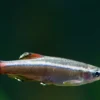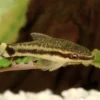
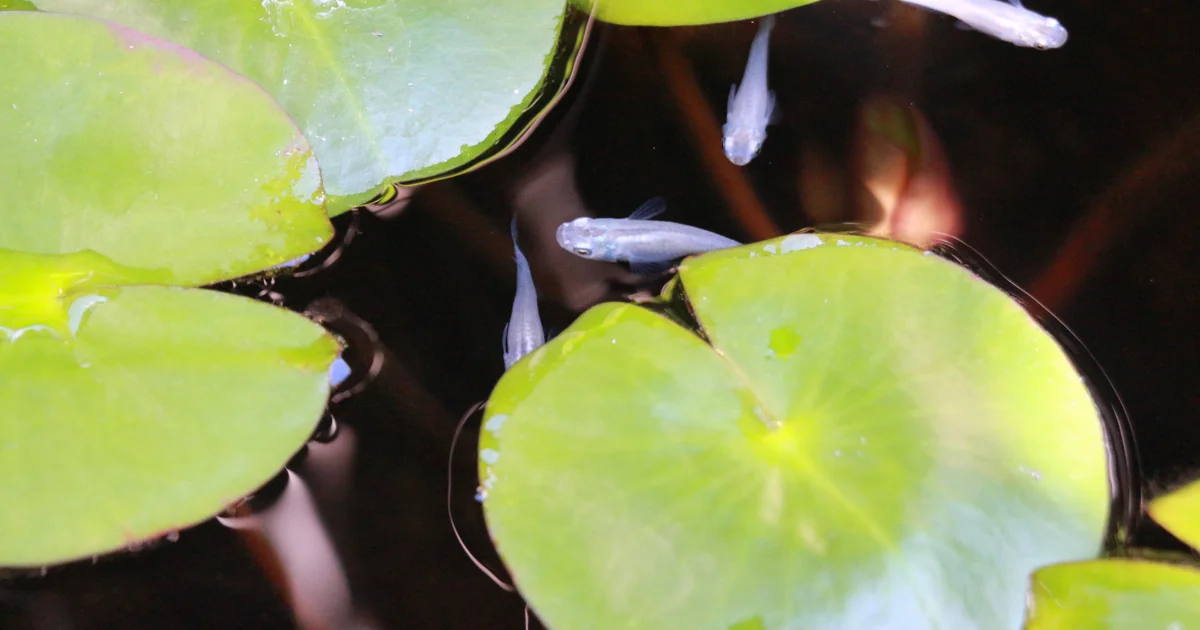
A medaka pond is one of the most rewarding low-cost projects in the freshwater hobby: a 16- to 53-gallon (60–200 L) outdoor container, a handful of hardy Japanese rice fish, a few floating plants, and you have a self-regulating mini-ecosystem that breeds prolifically through the warm months and survives most temperate winters with minimal intervention. No backyard required, a sunny balcony, patio corner, or side yard is enough. If you’ve been watching the medaka trend and wondering whether you can actually pull off an outdoor medaka pond without a koi-keeper budget or a half-acre lot, the answer is yes, and this guide will show you exactly how.
Medaka (Japanese rice fish, Oryzias latipes) are built for outdoor tub culture in a way that goldfish and koi simply aren’t. This article covers container choice, plant selection, stocking density, year-round seasonal management, winter overwintering, and predator protection, all calibrated to what medaka actually need, not recycled koi-pond advice.
Disclosure: This post contains affiliate links. If you purchase through a link on this page, we may earn a small commission at no extra cost to you. We only recommend products we’d use in our own tanks.
Why Medaka Work Outdoors Where Goldfish and Koi Don’t
The core reason medaka work so well in small outdoor containers comes down to thermal tolerance and body size. Medaka survive temperatures ranging from 36°F all the way to 100°F (2–38°C), with an optimal range of 68–78°F. That means they can handle cold temperate winters, hot summer afternoons on a sun-baked balcony, and everything in between. Wild medaka evolved in shallow Japanese rice paddies that fluctuate dramatically with the seasons, the species is essentially pre-adapted for exactly this kind of exposure.
Adult medaka top out at about 1.5 inches (4 cm), with some selectively bred “jumbo” lines reaching 1.75 inches. Compare that to a single-tail goldfish, which needs roughly 100 gallons of water per adult fish, or a koi that needs a minimum of 250 gallons, ideally 500, to reach its 24-inch adult size. A single 50-gallon tub that would be laughably inadequate for one goldfish can comfortably house 15 adult medaka.
That size-to-volume ratio is what makes the Japanese “biotope bowl” (ビオトープ) trend accessible to apartment-dwellers and gardeners who could never justify a full pond build. You don’t need excavation, a liner, or a pump house. You need a container, some soil, a handful of plants, and a few fish that are genuinely happy in that setup.
Container Options for an Outdoor Medaka Pond
Choosing the right container is your first real decision, and the options are more varied than most beginner guides suggest. Here’s how the main types compare:
| Container Type | Typical Volume | Pros | Cons |
|---|---|---|---|
| Food-grade plastic tub / stock tank | 13–53 gal (50–200 L) | Cheap, durable, widely available, easy to move | Not the prettiest; shallow versions can freeze through in cold zones |
| Ceramic suiren-bachi (Japanese lotus bowl) | 8–13 gal (30–50 L) | Traditional aesthetic; heavy walls provide some insulation | Heavier, pricier; smaller volume limits stocking |
| Styrofoam box | 10–26 gal (40–100 L) | Excellent insulation; the Japanese winter standard for a reason | Degrades over time with UV exposure; not attractive |
| Half-barrel / decorative planter | 20–40 gal (80–150 L) | Garden-friendly aesthetic; good volume | Wood can leach tannins; must be sealed or lined |
| In-ground liner pond | 50+ gal (200 L+) | Best thermal stability; can achieve adequate winter depth | Requires excavation; permanent; predator-accessible |
For most beginners, a food-grade plastic tub or stock tank in the 13–53 gallon (50–200 L) range is the practical default. It’s inexpensive, easy to reposition for optimal sun exposure, and large enough to support a productive colony. The ceramic suiren-bachi is the traditional choice if you’re going for the full Japanese biotope aesthetic, and they genuinely look beautiful on a patio or balcony. The styrofoam box is under-discussed in Western aquarium content but it’s extremely popular in Japan precisely because of its insulating properties during winter.
My own setup here in Hawaii is a few 27-gallon HDX storage containers (the heavy-duty plastic totes Home Depot sells for around $15, ~100 L each) in partial shade, planted with guppy grass (Najas guadalupensis) and pearlweed for cover and biofilm. The HDX route is the cheapest credible tub I’ve found for medaka pond builds, and the lid (which I leave off) is useful as a sun shield, a fry-grow-out divider, or a transport cover when I need to move fish. Partial shade is the variable I’d flag for anyone in a warm climate: full sun on a small tub spikes water temperature past comfort fast, while complete shade stalls the plants. Morning-sun, afternoon-shade is the sweet spot in the tropics. For egg collection, a friend made me a few DIY spawning mops out of cut-up pool noodles and aquarium sponges, and the females latch onto them reliably once conditioning kicks in. Eggs in my tubs hatch in 1 to 2 weeks depending on the temperature swing that week, which lines up with what most warm-climate keepers report.
Whatever container you choose, depth matters more than anything else for cold-climate keepers. More on that in the winter section below.
Medaka Container Sizing and Stocking Density
Three stocking densities circulate in Japanese aquaculture literature, and understanding which one applies to your setup prevents a lot of early mistakes.
The quality-of-life benchmark is 1 medaka per gallon (about 3–4 L). That’s the number to aim for if you want healthy, actively breeding fish with room to establish loose social hierarchies. A 16-gallon (60 L) tub at this density holds about 20 adults. With aeration and 30% weekly water changes, you can push to roughly 2 medaka per gallon (1 per 1.5 L). The absolute maximum, about 4 medaka per gallon (1 per liter), is only appropriate as a short-term situation and produces measurable stress. Start at the quality-of-life density and you’ll have a much more enjoyable experience.
Beyond volume, pay attention to depth. For outdoor overwintering in temperate climates, you want a minimum of 12 inches (30 cm) of water depth. This creates the thermal refuge layer that medaka use during dormancy. Containers that are wide and shallow freeze through more easily than containers that are narrower but deeper. A ceramic suiren-bachi at 8–13 gallons (30–50 L) might look adequately large on paper, but if it’s only 8 inches deep, it’s a poor choice for zone 5 winters without additional protection. I cover this in much more detail in the pond depth guide if you want the full math.
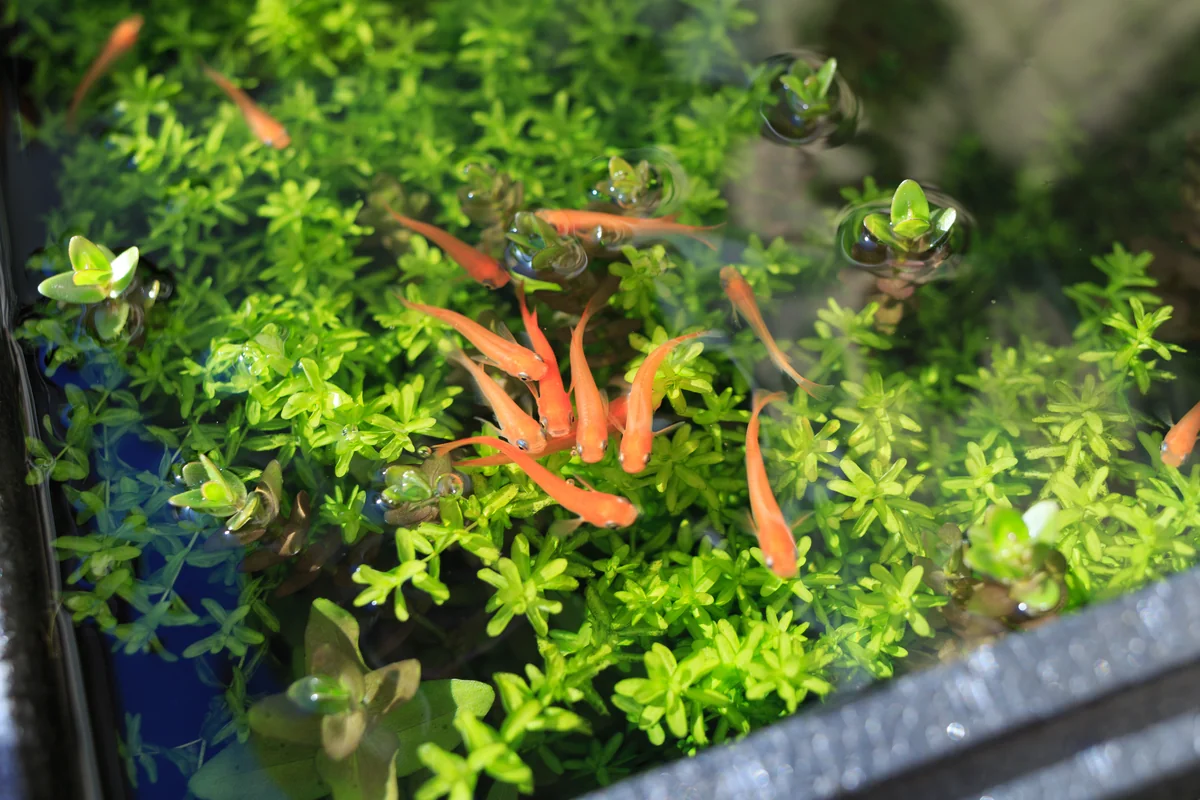
Medaka Pond Plants and Substrate Setup
Plants aren’t optional in a medaka biotope. They handle nutrient uptake, provide shade, give females a place to deposit eggs, and create refuge for fry. The right plant list makes the system nearly self-sustaining during the breeding season.
Hornwort (Ceratophyllum demersum) is probably the best all-around choice for a beginner medaka setup. It floats freely, tolerates wide temperature swings, competes aggressively with algae for nutrients, and provides excellent egg adhesion surface. Anacharis (egeria densa) is similarly hardy and serves the same function. Java moss is particularly valuable for fry: newly hatched medaka, called hariko (needle fry), need dense cover to avoid being picked off by adults.
Water hyacinth is the traditional Japanese biotope floater and has a massive root system that absorbs nitrate efficiently. However, there’s an important caveat: if you overplant it, the nighttime CO2 buildup from plant respiration can cause an oxygen crash. Use it, but don’t let it cover more than about half the surface. Additionally, water hyacinth is restricted or banned in many US states including Florida, Texas, Louisiana, and California, check your local regulations before ordering.
Surface floaters like Salvinia minima and Red Root Floater provide shade and nutrient absorption without the invasive-species concerns of water hyacinth in regulated states. For substrate, the Japanese standard is akadama red-ball soil or purpose-made medaka soil. Smooth river sand is a good alternative. Avoid sharp gravel entirely, medaka burrow when startled, and sharp particles can cause lacerations.
Position your medaka pond in the sunniest spot available. Direct sunlight is bactericidal, supports color development and fertility in adults, and accelerates growth in juveniles. If you’re worried about summer overheating, floating plants that cover roughly 30–40% of the surface provide enough shade without blocking the light benefits. Wondering whether a shadier spot could work? Our guide on whether fish ponds can be in the shade breaks that down in detail.
Stocking Your Medaka Pond: Varieties and Sourcing
The Japan Medaka Association recognizes over 450 named varieties as of 2023. For a first outdoor pond, you don’t need to chase premium imports, the classic varieties are genuinely beautiful and widely available.
The classic himedaka (orange) runs $2–5 per fish and is the variety most beginners encounter at local fish stores. For something more visually striking, Yokihi (the scarlet / deep orange-red variety developed by master breeder Yukio Ōba in 2004) runs $10–20 per fish and looks spectacular in a top-down ceramic bowl. Miyuki, with its metallic platinum sheen driven by iridophore expression, is similarly popular at $20–40 per fish. Sakura (cherry-blossom orange-red) falls in a similar price bracket and is beginner-friendly.
For premium varieties, Sapphire, high-end Miyuki, and show-grade Wazumi-lineage fish, prices range from $20 to well over $100 per fish depending on quality and lineage. Show-grade Japanese imports can reach $135–1,000+ per specimen, though that territory is for dedicated collectors, not beginner ponds.
In the US, SNR Medaka USA (North Carolina) and Aquatic Arts (Indianapolis area) are established specialty sources. Nolan’s Aquarium in California hosts the inaugural California Medaka Fest (2025), which is the first US-based dedicated medaka show, a sign of how quickly the hobby is establishing itself in North America.
Year-Round Seasonal Management
Medaka’s outdoor management calendar follows the same temperature-driven logic as koi and goldfish, but the thresholds are different and the winter requirements are considerably more forgiving.
Spring (Water Above 50°F)
When sustained daytime water temperatures climb past 50°F, you can begin feeding again, lightly at first. Breeding will begin once water consistently exceeds 65°F and photoperiod reaches 12–13 hours per day. Medaka are more photoperiod-sensitive than temperature-sensitive when it comes to spawning, so don’t expect eggs just because you’ve had a warm week in April if days are still short.
Summer (Breeding Season)
This is peak season. Females typically produce 10–30 eggs per spawn and, under good conditions, spawn daily throughout the season. The adhesive egg clusters cling to the female’s vent for several hours before being deposited on plant surfaces, the classic “pendant egg” behavior you’ll quickly learn to spot. Eggs hatch in 7–14 days at 25°C, depending on temperature.
One of the underrated bonuses of an outdoor medaka pond is natural mosquito control. Medaka actively consume mosquito larvae, which is a genuine public-health benefit and a great conversation-starter with skeptical neighbors. For more on this, check out our piece on whether pond fish eat mosquito larvae.
Fall (Feeding Ramp-Down)
As temperatures decline in late summer and autumn, gradually reduce feeding frequency and quantity. Below 60°F, switch to a lower-protein cold-water formula if you’re using one. Below 50°F sustained, stop feeding entirely. This isn’t a calendar date, it’s a thermometer reading.
Medaka Pond Winter Overwintering
This is the section people worry about most, and for good reason. Getting it wrong kills fish. Getting it right means your medaka emerge in spring having required essentially zero attention for four months.
The key principle: medaka survive winter in dormancy at the bottom of the container, where water sits near its maximum density at 39°F. They need that layer to remain unfrozen. Surface ice is fine. Complete freezing from bottom to top is fatal. For temperate climates, aim for at least 12 inches (30 cm) of water depth, deeper is better in zones 4–5. At this depth, the bottom water stays above freezing even when the surface ices over.
Stop feeding entirely once water temperature drops and stays below 15°C (59°F). Below that threshold, medaka cannot digest food properly and uneaten food rots in both the gut and the container. This is also why our guide on whether pond fish can survive without feeding is worth a read if you’re nervous about the long winter fast, the short version is that dormant fish need nothing.
During dormancy, do not disturb the water. No water changes, no plant reorganization, no tapping the ice to check on things. Disturbance breaks the thermal stratification the fish are depending on and causes stress in fish whose immune systems are essentially offline.
In zones 5–9, standard outdoor containers with adequate depth overwinter medaka reliably. Zone 4 is marginal, consider moving shallow containers into a garage or cold frame, or use an insulating styrofoam box with a floating de-icer rated 500–1500 W to maintain a gas-exchange hole in the ice. Zone 9 and warmer may see year-round activity with no true dormancy period. USDA zone viability aligns well with what works for most temperate North American climates.
Medaka Pond Predator Protection
Medaka are small enough that predators you might not worry about with koi, cats, dragonfly nymphs, birds, become real threats. A full container of medaka is an attractive and easy target.
Great blue herons are the most commonly reported North American pond predator. Heron decoys are unreliable, real herons learn to ignore them quickly. The approaches that actually work are lightweight pond netting (with gaps under 6 inches) or a fishing-line grid strung 3–6 inches above the water surface. Herons can’t land where their wings would contact lines, and they won’t wade through netting. Both approaches need to cover the entire container, not just the open water, since herons land on the edge and walk in.
For raccoons, motion-activated sprinkler systems are the most effective deterrent. They train animals via discomfort and most relocate after a few incidents. Position the sensor to trigger before the raccoon reaches the water’s edge, not at it. For mink and other ground-level predators, electric fencing (hot wires at 3 inches and 6–8 inches above ground) is the high-efficacy option, though most balcony or patio setups won’t need to go that far.
One underappreciated benefit of above-ground tubs and containers is the inherent predator resistance they provide compared to in-ground ponds. A raised 60-liter plastic tub is considerably harder for a raccoon to access than a ground-level liner pond. Dense floating plant cover also helps: fish instinctively retreat under floating plants when threatened, and a well-planted tub gives them genuine cover rather than open water to bolt across.
Water Quality and Equipment
One of the things that surprises people about the medaka biotope approach is how little equipment it actually requires. At low stocking densities (1 per gallon), a well-planted tub with regular top-offs can run without any filter at all. The plants handle nutrient uptake; the soil substrate hosts beneficial bacteria; natural sunlight handles some surface sterilization.
However, as you add fish or push toward the 1-per-1.5-L density, filtration becomes worthwhile. Our guide on whether small ponds need a pump covers the baseline thinking in detail. For medaka specifically, a small air pump with a sponge filter keeps water oxygenated and adds mechanical filtration without the strong flow that medaka (being weak swimmers) find stressful.
For water testing, the API Pond Master Test Kit is a reliable choice for outdoor containers. Test ammonia and nitrite during spring startup and after any significant water changes. Nitrate should stay under 40–50 ppm; above that, a partial water change (20–30%) brings it back down. Once a stable seasonal routine is established, quarterly testing is usually adequate for well-planted, appropriately stocked setups.
Feeding
The Hikari Medaka-No-Mai food line, available in Baby, Next, and Breed formulas, is the closest thing to an industry standard for medaka nutrition. The Baby formula is specifically sized and formulated for hariko (needle fry), the Next formula supports sub-adult growth, and the Breed formula provides the higher protein content that conditions fish for active spawning. During summer peak season, feed what the fish consume within a few minutes, two to three times daily.
Common Mistakes in Outdoor Medaka Ponds
Most medaka losses are preventable. These are the mistakes that show up most frequently, especially for keepers coming from an indoor aquarium background.
- Insufficient depth for winter. Shallow containers freeze through in zone 5–6 winters. If your tub is under 12 inches deep, plan for indoor storage or supplemental heating before fall.
- Feeding during dormancy. Continuing to feed below 15°C causes uneaten food to rot and gut contents to ferment. Stop feeding when water cools and don’t restart until it consistently clears 50°F.
- Co-housing with juvenile goldfish or koi. Adult koi and goldfish larger than about 30 cm may not catch medaka easily, but juvenile koi and goldfish will eat medaka aggressively. If you’re mixing species, dense plant refuge and species-accessible shallow zones are essential.
- Direct summer sun on a shallow tub without shade plants. A dark-colored 50-liter tub in full August sun can overheat fast. Float enough plant cover to shade 30–40% of the surface, or position a parasol to block the worst midday heat.
- Disturbing the container during winter dormancy. Water changes and plant reorganization during dormancy break the thermal layering the fish depend on. Leave the pond alone from first freeze through spring thaw.
- Over-planting with water hyacinth. It’s a great nutrient absorber, but dense water hyacinth cover causes nighttime CO2 accumulation that can crash oxygen levels overnight. Keep surface coverage moderate.
Medaka pond FAQs
Can medaka survive winter outdoors in zone 5?
Yes, with adequate container depth. You need at least 12 inches (30 cm) of water to maintain a thermal refuge layer above the frozen bottom. In zone 5, a styrofoam box or deep plastic tub with a floating de-icer is a reliable setup. Stop feeding entirely once water drops below 15°C (59°F) and do not disturb the container during dormancy.
How many medaka can I put in a 50-gallon tub?
A 50-gallon (roughly 190 L) tub at the quality-of-life density of 1 medaka per 3 liters supports about 60 adults, though most keepers stock lighter and let breeding fill the gap naturally. With aeration and regular water changes you can push higher, but starting conservatively gives you a stable, healthy colony before you add complexity.
Do I need a filter in an outdoor medaka tub?
Not necessarily. At low stocking densities in a well-planted tub, plants and beneficial bacteria in the substrate handle the nitrogen load without mechanical filtration. As stocking increases or planting decreases, a small sponge filter run by an air pump is a low-flow, low-stress option that adds meaningful biological and mechanical filtration.
What’s the best starter medaka variety for an outdoor pond?
Yokihi (scarlet / orange-red, $10–20 per fish) and Miyuki (metallic platinum, $20–40 per fish) are the most popular beginner-friendly varieties that still look genuinely striking in a top-down viewing setup. Both are hardy, widely available through US specialty retailers, and breed readily outdoors. Standard himedaka ($2–5 per fish) are a great low-cost starting point if you want to learn the system before investing in premium fish.
Will medaka eat mosquito larvae in an outdoor pond?
Yes. Medaka actively consume mosquito larvae. An established outdoor medaka tub is a meaningful natural mosquito control measure, especially useful in regions where standing water is a concern for mosquito-borne disease. This is one of the reasons the traditional Japanese biotope bowl tradition has remained popular for so long.
Final Thoughts
A medaka pond doesn’t require a backyard, a big budget, or a koi keeper’s infrastructure. It requires a container with adequate depth, a handful of the right plants, a modest stocking density, and respect for the seasonal rhythm that medaka evolved for. Get those things right and you’ll have a self-sustaining outdoor pond that breeds through summer, requires almost nothing through winter, and genuinely turns heads on any balcony or patio.
The combination of thermal toughness, small size, and extraordinary variety, over 450 named strains, from $2 himedaka to $1,000+ show-grade specimens, is why medaka have gone from a Japanese pandemic-era hobby trend to the most interesting thing happening in North American freshwater fishkeeping right now. The barrier to entry is a 50-liter tub and about $30 in plants. The ceiling is a competitive breeding program with show-quality Miyuki. Most of us will land somewhere comfortable in the middle.
Start with a simple setup, learn what your fish need through one full seasonal cycle, then expand from there. The biotope tradition exists because it works.