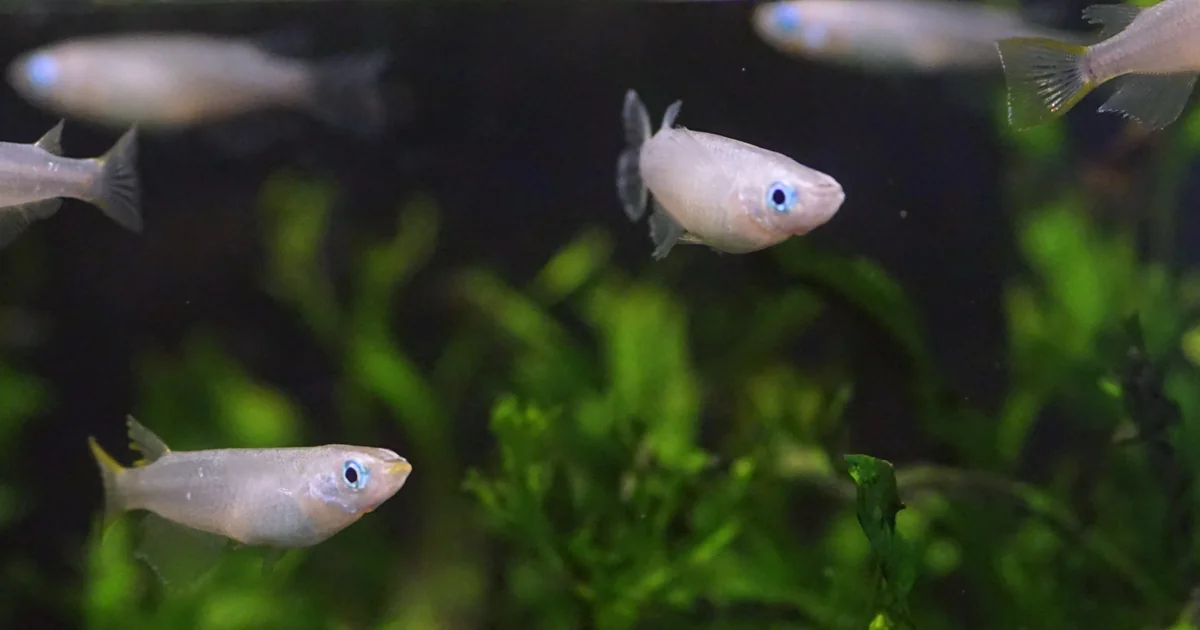
The first time I saw a school of Japanese rice fish gliding across the surface of a planted 10-gallon tank, I had the same reaction most people do: “Wait, that’s it? No heater? No fancy gear?” That’s the appeal in a sentence. The Japanese rice fish is one of the most underrated easy-care fish in the hobby, and once you understand what it actually wants, it’s hard to imagine going back to fussier tropical communities.
Quick name housekeeping before we go further, because the search results for this species are a mess. Japanese rice fish, medaka, Japanese killifish, and Oryzias latipes are all the same fish. The hobby uses these names interchangeably depending on which corner of the internet you landed in. I’ll use “Japanese rice fish” and “medaka” pretty freely throughout this guide because both are common in English-speaking forums and both pull search traffic.
What makes them special: they tolerate cool indoor temperatures that would stress most tropical fish, they breed daily in summer with almost no intervention, and they work equally well in a 10-gallon planted aquarium or a ceramic bowl on a sunny patio. If your house runs cold, if you don’t want to babysit a heater, or if you’ve always wanted a fish that actually breeds for you instead of just existing, keep reading.
Disclosure: This post contains affiliate links. If you purchase through a link on this page, we may earn a small commission at no extra cost to you. We only recommend products we’d use in our own tanks.
Japanese rice fish care at a glance
Before we dig into setup, here’s everything you need to know in one table. These figures come from multi-source verified species data and represent the working range most keepers should plan around.
| Attribute | Detail |
|---|---|
| Common Names | Japanese rice fish, medaka, Japanese killifish |
| Scientific Name | Oryzias latipes |
| Family | Adrianichthyidae (subfamily Oryziinae) |
| Origin | Japan, Korea, Vietnam, China, Taiwan |
| Adult Size | 1.5 in (4 cm); jumbo lines up to 1.75 in |
| Lifespan | 2–5 years; 5+ in optimal outdoor biotopes |
| Tank Size | 10 gal minimum indoor; 5+ gal viable for outdoor biotope |
| Temperature | Survives 36–100°F (2–38°C); optimal 68–78°F |
| pH | 6.5–8.0 (wild populations tolerate 5.0–9.0) |
| Temperament | Peaceful; loose schooler in groups of 6+ |
| Diet | Omnivore; surface and mid-water feeder |
| Care Level | Easy |
A note on conservation status, because it shapes how you should think about sourcing. The IUCN lists O. latipes as Least Concern globally thanks to its 755,000 km² range, but the Japan Ministry of Environment lists the species as Endangered within Japan itself. Wild Japanese populations have collapsed from rice-paddy modernization and agrochemical use. The captive-breeding hobby has effectively become the species’ refuge, similar to what happened with the white cloud mountain minnow.
What Japanese rice fish look like (and the 450+ varieties)
Wild-type medaka are subtle. Picture a small, slender fish with an olive-brown back, a silver belly, and a flat-topped profile that lets light bounce off the dorsal surface. That top-down reflectivity is the entire reason traditional Japanese keeping uses shallow ceramic bowls instead of vertical aquariums. Viewed from above in sunlight, even the plainest medaka shimmer.
For decades, that was the whole story. Then in 2004, Japanese master breeder Yukio Ōba developed the Yokihi variety by selectively breeding for vivid red coloration, and the modern medaka boom started in earnest. As of 2023, the Japan Medaka Association recognizes over 450 named varieties. New strains are released every season.
The major color lines you’ll see in the US trade
US availability is still catching up to Japan, but several lines have become reasonably accessible through specialty importers. Here’s an overview of what you’re likely to encounter and roughly what to budget.
| Variety | Appearance | Typical US Price |
|---|---|---|
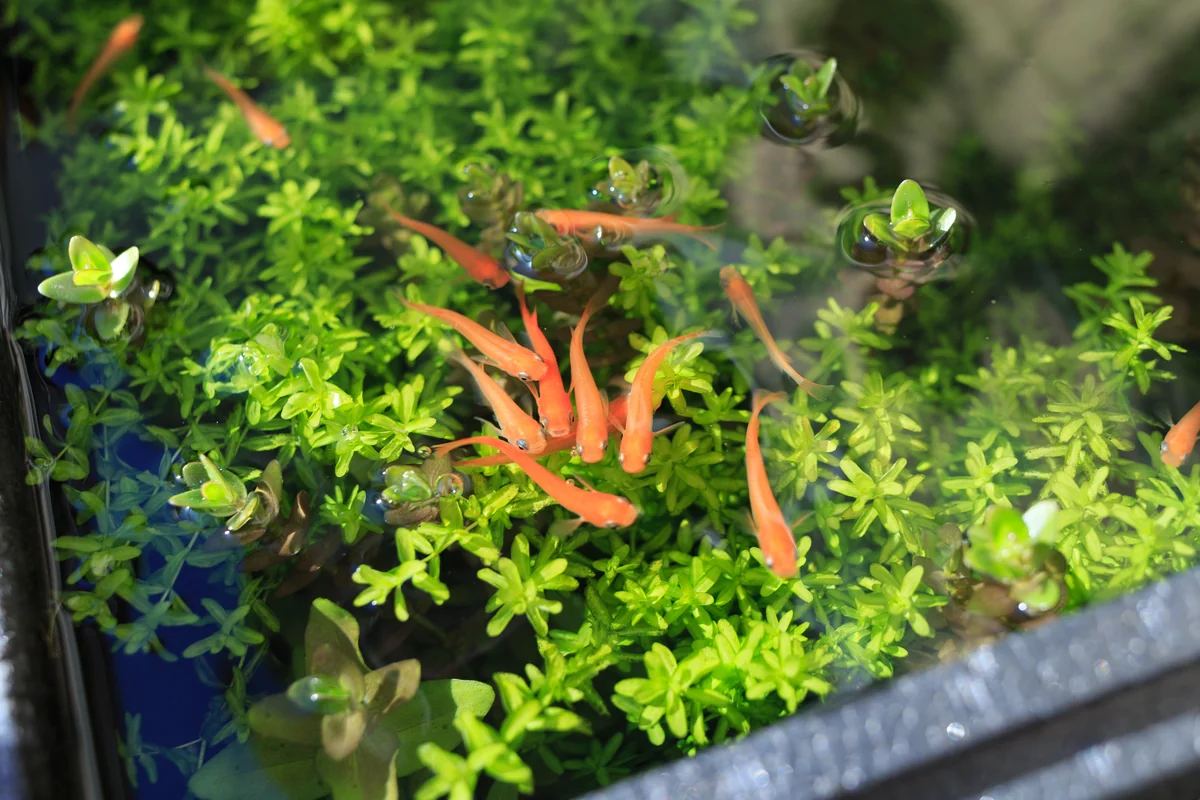
| Himedaka | Classic orange domesticated strain; the “pet store medaka” | $2–5 |
| Yokihi | Vivid red; the variety that started the modern boom in 2004 | $10–20 ($67+ show grade) |
| Miyuki | Metallic platinum sheen along the dorsal surface | $20–40 |
| Sapphire | Brilliant blue iridescence | $20–100+ |
| Sakura | Bright orange-red, named after cherry blossoms | $10–20 |
| Daruma | Short-body morph with roughly 50% normal length | $10–27 |
| Hikari | Light-body morph; diamond-shaped tail, reflective dorsal | Varies by base color |
| Sanshoku (Tricolor) | Red, white, and black like a miniature koi | $33–100+ |
The honest caveat on premium varieties: show-grade Japanese imports from top breeders can run $135–1,000+ per specimen. For a first medaka tank, start with Himedaka, Yokihi, or Sakura. They’re widely available, hardy, and give you the full medaka experience without the pressure of babysitting expensive show fish.
Medaka tank size and setup requirements
Ten gallons is the practical indoor minimum for a school of 6 Japanese rice fish. Could you technically keep them in less? Sure, especially in an outdoor biotope bowl where natural biofilm and plant uptake do most of the filtration work. But for an indoor tank with standard filtration and lighting, 10 gallons gives you enough water volume to buffer mistakes and enough swimming length for a proper school to spread out.
Footprint matters more than height. Medaka are surface and mid-water fish; they don’t use vertical space the way angelfish or gouramis do. A 20-gallon long beats a 20-gallon tall every time for this species. If you’re shopping for your first setup, this is a good moment to read through our best aquarium kits guide and our complete first-aquarium setup walkthrough.
Filtration: keep it gentle
A sponge filter is the gold-standard recommendation for medaka tanks, the right pick if you’re setting up a new one. A standard dual-sponge filter handles a 10-gallon medaka tank without breaking the bank. The reason sponges work so well: they generate gentle current, they’re safe for fry (medaka breed constantly, so this matters), and they grow biofilm that adult medaka and shrimp will graze on.
If you prefer a hang-on-back filter, that’s fine too. Just baffle the intake with a sponge prefilter so fry and eggs don’t get sucked in, and dial the flow down. Medaka come from still or slow-moving rice paddies. They’ll tolerate moderate current, but they don’t thrive in tanks set up like riverine biotopes.
Substrate and decor
Skip sharp gravel. Medaka burrow when startled and rough substrate can scrape them. Use smooth river sand, fine-grained aquasoil, or one of the Japanese-style “medaka soil” products marketed for this hobby. Bare-bottom works too, especially in breeding setups where you want to spot eggs easily.
Substrate color affects color expression in medaka. Dark substrate enhances melanophore (black pigment) display. White or pale substrate washes them out. If you’ve got a Yokihi or any of the darker lines you want to show off, lean dark.
Plants: not optional
Live plants aren’t decorative in a medaka tank; they’re functional. Java moss provides the best fry refuge and egg adhesion substrate in the hobby. Hornwort floats, soaks up nutrients aggressively, and gives females somewhere to deposit their daily eggs. Floaters like red root floater or salvinia minima provide surface shade and additional nutrient export.
For a 10-gallon indoor medaka tank, a handful of java moss, a few stems of hornwort, and either a betta-style floater carpet or a couple of anubias on driftwood will get you 90% of the benefit. You don’t need a competitive Iwagumi aquascape.
Medaka water parameters: temperature, pH, and hardness
This is the section where Japanese rice fish separate themselves from every other community fish you’ve ever kept. The species survives a documented range of 36–100°F (2–38°C). Read that again. That’s not a typo. Medaka tolerate near-freezing temperatures on the low end and bathwater-warm conditions on the high end.
However, “survives” and “thrives” are different things. The optimal range is 68–78°F (20–26°C). At those temperatures medaka are active, colorful, and reproductively engaged. Most indoor rooms in temperate climates sit naturally inside this range year-round, which is exactly why a heater is usually unnecessary.
If your house drops below 65°F in winter or climbs above 80°F in summer, you might want supplemental temperature management. Otherwise, skip the heater. Our aquarium heaters guide covers the situations where you do need one, but for medaka in a normal indoor environment, that’s typically not you.
Water chemistry parameters
| Parameter | Target Range |
|---|---|
| Temperature | 68–78°F (optimal); 36–100°F (survivable) |
| pH | 6.5–8.0 |
| GH | 5–20 dGH |
| KH | 4–15 dKH |
| Ammonia | 0 ppm |
| Nitrite | 0 ppm |
| Nitrate | Below 40 ppm |
Medaka tolerate a broader pH range than most fish, but stability matters more than hitting a specific number. Pick the value your tap water naturally provides, ensure it’s stable, and don’t chase imaginary targets with chemicals. Test with the API Freshwater Master Test Kit; the liquid kit is the standard for accuracy and you’ll need it for cycling anyway.
Cycling the tank before fish
Before adding any medaka, the tank needs to be fully cycled. A standard fishless ammonia cycle takes 4–6 weeks from scratch, or 1–2 weeks if you can borrow seeded media from an established tank. The process establishes Nitrosomonas and Nitrobacter bacteria that convert toxic ammonia to nitrite and finally to relatively harmless nitrate.
For dechlorinating tap water during water changes and dosing during cycling, Seachem Prime is the standard recommendation. It detoxifies chlorine, chloramine, and ammonia simultaneously, and the dose-per-gallon is small enough that one bottle lasts a long time.
What do Japanese rice fish eat?
Medaka are surface-feeding omnivores with small mouths. The single most important diet rule: feed food small enough that they can actually eat it. Standard tropical flakes are usually too big and end up sinking past them. Medaka-specific pellets are sized appropriately and formulated for the species’ nutritional needs.
The Japanese aquaculture standard is the Hikari Medaka-No-Mai line. The breed formulation is high-protein and designed for adults in reproductive condition; it’s what most serious medaka keepers in Japan run as a staple. Otohime fry pellets, also from the Japanese aquaculture industry, are excellent for juveniles transitioning off live foods and into dry diet.
For variety and breeding conditioning, supplement with live or frozen foods. Daphnia, baby brine shrimp, mosquito larvae (free, if you can collect them safely), and blackworms are all excellent. Medaka go wild for live food and condition rapidly for spawning when they get it.
Color enhancement through diet
Here’s a quirk that’s worth understanding if you keep red varieties like Yokihi or Sakura. Medaka cannot synthesize the red carotenoid pigments themselves; the erythrophore cells need dietary astaxanthin to express red coloration. In other words, you have to feed the color in.
Sources of astaxanthin include krill meal, *Haematococcus pluvialis* algae supplements, and color-enhancement formulas from Hikari and other manufacturers. Paprika and marigold petal extract provide carotenoids that boost orange tones. For yellow lines, spirulina-rich foods help. Container substrate color reinforces these effects: dark substrate plus a carotenoid-rich diet maximizes red and black expression simultaneously.
Feeding schedule
Feed twice daily, with portions small enough that everything is consumed in under two minutes. Overfeeding is the most common mistake new medaka keepers make. The fish are tiny and don’t need much. If you’re seeing food on the substrate after a feed, you fed too much.
In cooler water (below 65°F), reduce feeding frequency. Medaka metabolism slows in cold conditions and uneaten food fouls the water. In outdoor biotopes during winter, stop feeding entirely when temperatures drop below about 50°F.
Best medaka tank mates (and what to avoid)
Medaka are peaceful, slow, and small. They get bullied easily, they get outcompeted at feeding time by faster fish, and they can be perceived as food by anything larger than them. That narrows the compatible-tankmate list quite a bit, but the species that do work tend to work really well.
| Species | Compatibility | Notes |
|---|---|---|
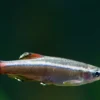
| White Cloud Mountain Minnow | Good | Excellent match; shared coolwater preference (60–72°F overlap) |
| Panda Cory | Good | Cooler-water cory; peaceful bottom-dweller occupying different niche |
| Cherry Shrimp (adults) | Good | Adult shrimp safe; some fry predation by adult medaka is normal |
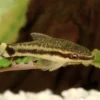
| Otocinclus | Good | Peaceful algae grazers; ignored by medaka |
| Small peaceful tetras (ember, glowlight) | Good | Generally compatible in temperature overlap zone (74–78°F) |
| Nerite snails | Good | Algae cleanup; ignored by all fish; can’t reproduce in freshwater |
| Zebra Danios | Caution | Outcompete medaka for food; constant high activity stresses them |
| Tiger Barbs | Caution | Fin nippers; medaka’s small fins are easy targets |
| Male Bettas | Avoid | Size mismatch; bettas often perceive medaka as prey or rivals |
| Angelfish | Avoid | Will eat medaka once large enough; ~3 inches is the danger threshold |
| Crayfish | Avoid | Will catch and eat sleeping medaka at night |
| Larger cichlids | Avoid | Predation guaranteed |
My favorite community pairing is medaka with white cloud mountain minnows and panda corys. All three species share a preference for cooler water (60–77°F overlap), they’re peaceful, and they occupy different niches, medaka at the surface, white clouds in the midwater, and pandas working the substrate. It’s one of the few genuinely cohesive unheated community setups in the hobby.
How to breed Japanese rice fish at home
Medaka are arguably the easiest egg-laying fish in the freshwater hobby. Two conditions trigger spawning: water temperature of at least 65°F (18°C) and a photoperiod of 12–13 hours of light daily. Under those conditions, females spawn daily through the breeding season.
The spawning behavior is distinctive and worth watching for. After fertilization, females carry a cluster of 10–30 adhesive eggs attached to their vent for hours before depositing them on plants, spawning mops, or fine-leaved vegetation. The “pendant egg” behavior is unmistakable once you’ve seen it: a female swimming around with what looks like a tiny grape cluster trailing behind her.
Setting up for breeding
You can breed medaka in the display tank if you’ve got dense planted refugia, or you can collect eggs and rear fry in a dedicated grow-out container. The egg-collection approach gives much higher survival rates because adult medaka will eat their own fry given the opportunity.
For collection, drop a clump of java moss or a yarn spawning mop into the tank during breeding season. Check daily. Move the moss or mop (with eggs attached) into a separate hatching container with the same water parameters. Eggs hatch in 7–14 days at 25°C; longer at lower temperatures.
Raising fry
Newly hatched medaka fry are called *hariko* (Japanese for “needle”), and at about 4–5 mm they’re small but not as tiny as some other egg-layer fry. Their mouths are large enough to accept infusoria, paramecium, and powdered fry foods from day three onward. By the second week they’ll take baby brine shrimp, and Otohime fry pellets work well as a dry-food bridge to standard medaka diet.
With proper hariko care, 70%+ survival rates to adulthood are achievable. The fish reach sexual maturity in 3–4 months under good conditions, which means a single productive female can generate hundreds of juveniles across a single summer.
Keeping medaka in an outdoor patio biotope
The outdoor angle is what makes medaka unique among hobby fish. In temperate climates (USDA zones 5–9), Japanese rice fish thrive in unheated outdoor tubs, ceramic suiren-bachi bowls, half-barrels, and small backyard biotopes year-round. They’re descended from rice-paddy fish; cool seasonal water is what they evolved to handle.
A 8–13 gallon (30–50 L) ceramic lotus bowl in a sunny spot, planted with hornwort and water hyacinth, will support a self-sustaining colony of 10–15 medaka with minimal intervention. Depth matters more than total volume for winter survival; 12+ inches of water depth gives the fish an unfrozen thermal refuge during cold snaps. They’ll hibernate at the substrate through winter without supplemental feeding and resume normal activity in spring.
If you’re in a tropical or subtropical climate, the setup gets easier. There’s no winter survival problem to solve, and the colony breeds essentially year-round. I keep my medaka in 27-gallon HDX storage containers (the heavy-duty plastic totes Home Depot sells for around $15 each) here in Hawaii under partial shade, planted with guppy grass (Najas guadalupensis) or pearlweed for cover and surface biofilm. Partial shade is the key variable in warm climates: full sun on a small tub pushes water temps past comfort fast, while complete shade stalls the plants and stresses the fish. A morning-sun, afternoon-shade position is the sweet spot. A friend made me a few DIY spawning mops out of cut-up pool noodles and aquarium sponges, and the females latch onto them reliably when they’re ready to spawn. Egg collection becomes trivial once you have one or two of those floating in each tub.
There’s also a practical pest-control angle. Medaka are voracious consumers of mosquito larvae. An outdoor medaka tub actively reduces mosquito populations in the surrounding yard, which is a documented public-health benefit and a legitimate reason to set one up beyond just the aesthetics.
Common medaka diseases and how to treat them
Medaka are unusually disease-resistant for their size. That said, two conditions account for most health problems in this species: columnaris and ich.
Columnaris is the bigger threat, and it’s the one most likely to catch new keepers off guard. The infection presents as whitish-gray “saddle” patches on the back, cotton-like patches around the mouth, or fin rot. Critically, columnaris becomes more virulent at higher temperatures, which is the opposite of how ich works. Treating columnaris like ich (raising temperature) accelerates fish mortality.
| Condition | Symptoms | Treatment |
|---|---|---|
| Columnaris | Gray-white saddle patches on dorsal; cotton-like mouth fuzz; fin rot | Lower temperature to 24°C (75°F); kanamycin sulfate or Furan-2; salt supplements |
| Ich (White Spot) | Pinpoint white “salt grain” dots on body and fins; flashing | Ich-X per label, or raise temperature gradually (medaka tolerate elevated temps well) |
| Fungal infections (saprolegnia) | White cottony growth on wounds or eggs | Methylene blue for eggs; salt + Ich-X for fish |
| Bacterial fin rot | Ragged, frayed fin edges; usually secondary to water quality issues | Improve water quality; Furan-2 if advanced |
Prevention is straightforward. Quarantine new fish for 2–4 weeks before adding them to your main tank, maintain stable water parameters, don’t overcrowd, and feed appropriately. Stress is the underlying cause of most disease outbreaks in healthy stock, and removing stressors is the single most effective preventive measure.
Acclimating new medaka to your tank
Medaka are hardier to acclimation stress than most hobby species. For fish picked up locally with short transport times, plop-and-drop or a 15-minute bag-float for temperature equalization works fine. The bag water gets discarded; the fish get netted into the tank.
For online-shipped medaka that have been in the bag for 12+ hours, prioritize minimizing ammonia exposure over slow chemistry equilibration. A fast 30-minute drip acclimation, or even a careful plop-and-drop, is better than a long 90-minute drip that risks converting accumulated ammonia from the non-toxic NH4+ form into toxic NH3 as bag pH slowly rises. The full breakdown of which acclimation method to use when is in our acclimation methods reference, but for medaka specifically: keep it short, keep it simple.
Are Japanese rice fish right for your tank?
Medaka are perfect for a specific subset of keepers, and a poor fit for others. Here’s the honest decision framework:
Great fit if:
- Your indoor temperature naturally sits in the 65–78°F range year-round and you don’t want a heater
- You want a fish that visibly breeds and produces fry without intervention
- You’ve got a sunny patio, balcony, or garden spot for an outdoor biotope bowl
- You appreciate a top-down aesthetic and shallow ceramic containers over tall display tanks
- You’re a beginner who wants an easy first egg-layer experience
- You’re building a cooler-water community with white clouds and panda corys
Look elsewhere if:
- You want a tropical 78–82°F community with discus, rams, or cardinal tetras
- You’re keeping any fish over about 3 inches that might eat them
- You want a “wow factor” centerpiece fish viewed from the side
- Your tank is smaller than 5 gallons (consider one of the options in our best fish for 5-gallon tanks guide instead)
For families with kids, medaka work well as a starter species precisely because they breed visibly and tolerate beginner-level water-quality mistakes better than most. Our kid-friendly aquarium guide covers the broader stocking and setup considerations.
Japanese rice fish care FAQs
Do Japanese rice fish need a heater?
Usually no. Their optimal range is 68–78°F, which most indoor rooms hit naturally year-round. If your house regularly drops below 65°F in winter, you might want a heater set to 70°F as backup. For outdoor biotopes in temperate climates, they overwinter without supplemental heating as long as the container has enough depth (12+ inches) to prevent freezing solid.
How many medaka can I keep in a 10-gallon tank?
A 10-gallon tank comfortably holds 8–12 adult medaka, assuming proper filtration and weekly water changes. For a quality-of-life recommendation, aim for 1 medaka per gallon (about 3–4 L) of water. Outdoor biotopes can support slightly higher densities thanks to plant filtration, but indoor setups should err toward the lower end.
Are Japanese rice fish and medaka the same thing?
Yes. Japanese rice fish, medaka, and Japanese killifish are all common names for Oryzias latipes. You’ll see the names used interchangeably in pet stores, forums, and breeder listings. The species belongs to family Adrianichthyidae and is technically not a true killifish, though “killifish” stuck as a common name in older Western references.
How long do medaka live?
Most medaka live 2–5 years in captivity. Outdoor biotope specimens in optimal conditions can reach 5+ years thanks to the seasonal temperature variation that mimics their natural life cycle. Lifespan is heavily influenced by water quality, diet, and whether the fish is actively bred (breeding is metabolically expensive).
Can medaka live with guppies?
It’s possible in a temperature overlap zone (74–78°F), but I don’t recommend it long-term. Guppies prefer warmer water (76–82°F) and tend to outcompete medaka at feeding time due to their faster swimming and more aggressive feeding behavior. The two species are also susceptible to different parasite loads. If you want a peaceful community, pair medaka with white cloud mountain minnows or panda corys instead.
Final thoughts on keeping Japanese rice fish
Japanese rice fish are one of those species that quietly reward keepers who match their conditions correctly. They aren’t flashy in the way a school of cardinal tetras is flashy. They aren’t impressive in the way a centerpiece angelfish is impressive. What they are is dependable, prolific, peaceful, and uniquely suited to setups (unheated rooms, outdoor patio bowls, cooler-water communities) where most tropical fish would struggle.
The captive-breeding hobby has effectively become this species’ refuge while wild Japanese populations have collapsed, and the diversity of color varieties means there’s genuine collector appeal beyond the basic husbandry case. Whether you start with cheap Himedaka from a local shop or save up for show-grade Yokihi or Miyuki imports, the care requirements are the same and the breeding is reliable.
If you’re building your first tank for medaka, start with our first aquarium setup guide and our best aquarium kits roundup. If you’re a parent setting one up for a kid, our kid-friendly tanks guide covers the size-appropriate options. And if you live somewhere mild enough to keep them outdoors, the patio biotope route is honestly the more interesting long-term project. Either way, the species will mostly take care of itself once the water is right.